
Article Summary:
You’re often your own harshest critic—judging yourself and speaking to yourself in ways you’d never do to others. Here you’ll discover how to practice self-compassion as a potent antidote.
+++
When the meeting ended, some people nodded and smiled. But that’s not what stuck with Rachel.
What stuck with her was the prospect’s question she didn’t answer fully. The slide she knew she could’ve explained better. The moment she fumbled for words.
By the time she got back to her desk, she was berating herself:
You blew it. After all that practice. What an idiot.
It didn’t matter that the prospect followed up with interest.
Instead, she replayed her mistakes again and again.
What’s wrong with you?
By the end of the day, she was drained, discouraged, and quietly dreading her next presentation.
But what Rachel needed wasn’t more self-flagellation and judgment. It was self-compassion.
What Is Self-Compassion
Compassion is the feeling you get when you’re faced with the suffering of another and you’re motivated to relieve it. With self-compassion, you simply turn that feeling and motivation inward.
According to Dr. Kristin Neff, a pioneer in self-compassion research and a University of Texas professor, self-compassion has three elements:
- self-kindness: being kind and understanding toward yourself when you’re having negative feelings and not being harsh in judging yourself
- mindfulness: noticing your thoughts and feelings without getting caught up in them, which only leads to further suffering
- common humanity: perceiving your pain or discomfort as part of our shared human experience and not falling into the trap of overly dramatizing your pain
When you’re exercising self-compassion, you stop being your own enemy and you start being an ally to yourself.
Sometimes it feels easier to be compassionate with others than it does with yourself. The thought of self-compassion might make you feel undeserving, self-indulgent, or needy. It might summon embarrassment or shame.
Self-compassion may feel unfamiliar to you because it wasn’t modeled to you when you were young. You may have grown up with parents who were harsh and judgmental with themselves and/or others. They have been overly critical of you and made you feel rejected.
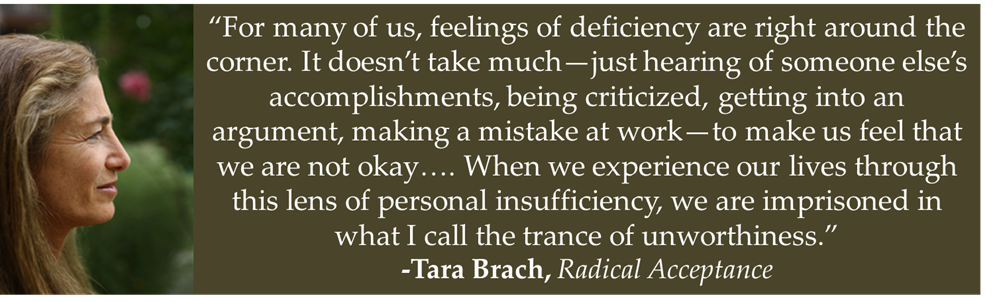
In her book Radical Acceptance, Tara Brach notes that you may be in the habit of distancing yourself from emotional pain—things like anger, jealousy, or fear—by “covering it over with self-judgment.” In fact, some people do this their whole lives, often without even being aware of it. And they can be brutal about it.
Self-compassion isn’t about suppressing your pain or trying to will it away. Rather it’s about accepting that you’re feeling pain but treating yourself with care and kindness—and giving yourself comfort and support. (1)
In her book, Self-Compassion: The Proven Power of Being Kind to Yourself, Dr. Neff busts some common misconceptions about self-compassion. The highlights: It’s not a form of self-pity, and it doesn’t signal weakness. Self-compassion won’t make you complacent. And it’s not selfish or narcissistic.

The Benefits of Practicing Self-Compassion
Self-compassion brings a wide range of benefits. When you practice it, you’ll likely have lower levels of anxiety and depression. It will make you less likely to engage in rumination and less likely to suppress your thoughts and feelings (which can be harmful). Self-compassion can help you address perfectionism. It can make you more likely to learn from your mistakes and to persist through adversity while also enhancing your ability to cope with failure.
Practicing self-compassion can lead to significant improvements in your social connectedness and relationships. It can boost your motivation for self-improvement by avoiding the cycle of negative self-talk, and it can lead to greater overall life satisfaction.
But there are things that can get in the way. According to Dr. Neff, things like self-judgment, isolation, and overidentification can inhibit self-compassion.
How to Practice Self-Compassion
The path to self-compassion begins with changing how you relate to yourself when things go wrong. Here are 10 ways you can practice self-compassion:
1. Notice when you’re being critical of yourself. For example, are you calling yourself names or talking down to yourself? (“You’re such an idiot. I can’t believe how stupid you are. You’re so pathetic.”) If you’re like others, it may be when you’re experiencing disappointment or failure—or shame, embarrassment, or humiliation.
2. Shift your perspective outward. Consider how you would respond to a friend in the same situation. Chances are, you’d be far more understanding with them than you are with yourself. Why not take that gentler and more supportive approach with yourself?
3. Be tolerant of your mistakes, flaws, and inadequacies. Recognize that you’re only human, and that nobody is perfect. Remind yourself that self-criticism is not only ineffective but also damaging. Trying to motivate yourself to change by being extra harsh on yourself is a recipe for failure.
4. Engage in positive self-talk. Notice the tone of your inner voice. When it turns harsh or critical, gently interrupt it and replace it with something more supportive. You don’t have to be over the top. Just speak to yourself in a way that’s grounded in reality and fair while also encouraging.
5. Remind yourself that what you’re feeling isn’t unique to you. There are many people far and wide who are probably experiencing what you’re experiencing and feeling the way you’re feeling. We all experience the ups and downs of life.
6. Place your pain and suffering in the larger context of the human journey of challenge and growth. Remind yourself that struggle isn’t a personal failing. It’s part of being human, and something everyone experiences in different ways. When you step back and see your difficulties as part of a shared journey, they often feel more manageable and less isolating.
7. Write yourself a note or letter that extends compassion to yourself. Draft it from the perspective of a friend, family member, or mentor who supports you enthusiastically, loves you unconditionally, and wants what’s best for you. Sometimes there’s great power in putting things down on paper.
8. Practice mindfulness, perhaps by engaging in loving-kindness meditation. Instead of getting swept up in your thoughts or pushing your feelings away, simply notice what’s happening with a sense of openness and curiosity. Practices like loving-kindness help you slow down and intentionally direct warmth and goodwill toward yourself, especially in moments when you need it most.
9. Seek help via therapy, perhaps including compassion-focused therapy (CFT). A skilled therapist can help you recognize patterns of harsh self-criticism and guide you toward healthier, more compassionate ways of relating to yourself. You don’t have to figure it out alone. Having structured support can make it easier to turn insight into lasting change.
10. Engage in prayer. When you’re facing adversity or difficult feelings, appeal to a higher spirit or something larger than yourself. In doing so, you can find a sense of comfort, perspective, and connection that reminds you that you’re not carrying it all on your own.
Conclusion
In the end, self-compassion isn’t indulgence. It’s fuel for better living. It can help make you a better leader, parent, friend, and human being.
Self-compassion steadies you when you stumble and keeps you moving forward without the drag of self-judgment. When you learn to treat yourself with the same understanding and care you offer others, you don’t lower your standards; you raise your capacity to meet them.
Don’t expect instant results. It may take time and effort for you to develop this capacity, especially if you have a history of being hard on yourself.
The next time you struggle, pause, soften, and choose a different response. That small shift can change not just how you feel, but how you live.
Tools for You
- Traps Test (Common Traps of Living) to help you identify what’s getting in the way of your happiness and quality of life.
- Quality of Life Assessment so you can discover your strongest areas and the areas that need work, then act accordingly.
- Crafting Your Life & Work (my signature online course) to help you design your next chapter and create a life you love.
Related Articles, Books, & Other Resources
- “The Incredible Grounding Power of Self-Acceptance”
- “How to Stop Our Negative Self-Talk: 15 Practices”
- “The Mental Prisons We Build for Ourselves”
- “Breaking the Trance of Unworthiness”
- “How to Build Confidence in Ourselves and Our Leadership”
- “Do You Have Limiting Beliefs About Yourself?”
- Self-Compassion Institute (Dr. Kristin Neff)
- Brene Brown, The Gifts of Imperfection: Let Go of Who You Think You’re Supposed to Be and Embrace Who You Are
- Kristin D. Neff, “Self-Compassion: An Alternative Conceptualization of a Healthy Attitude Toward Oneself,” Self and Identity 2 (2003): 85-101.
- Christopher K. Germer, The Mindful Path to Self-Compassion: Freeing Yourself from Destructive Thoughts and Emotions
- Kristin Neff, Self-Compassion: The Proven Power of Being Kind to Yourself
- Kristin Neff, Fierce Self-Compassion: How Women Can Harness Kindness to Speak Up, Claim Their Power, and Thrive
- Kristin Neff and Christopher Germer, Mindful Self-Compassion for Burnout
- Kristin Neff and Christopher Germer, The Mindful Self-Compassion Workbook
- Video: “The Space Between Self-Esteem and Self Compassion,” Kristin Neff at TEDx Centennial Park Women
Postscript: Inspirations on Self-Compassion
- “When we carry our pain with the kindness of acceptance instead of the bitterness of resistance, our hearts become an edgeless sea of compassion. We… become the compassionate presence that can hold, with tenderness, the rising and passing waves of suffering.” -Tara Brach, Radical Acceptance
- “When we’re kind to ourselves, we create a reservoir of compassion that we can extend to others.” – Brené Brown, The Gifts of Imperfection
- “A moment of self-compassion can change your entire day. A string of such moments can change the course of your life.” -Christopher K. Germer, The Mindful Path to Self-Compassion: Freeing Yourself from Destructive Thoughts and Emotions
- “…this revolutionary act of treating ourselves tenderly can begin to undo the aversive messages of a lifetime.” -Tara Brach, Radical Acceptance
- “To cultivate the tenderness of compassion, we not only stop running from suffering, we deliberately bring our attention to it…. as we feel suffering and relate to it with care rather than resistance, we awaken the heart of compassion.” -Tara Brach, Radical Acceptance
- “All you need is already within you, only you must approach your self with reverence and love. Self-condemnation and self-disgust are grievous errors. Your constant flight from pain and search for pleasure is a sign of love you bear for your self, all I plead with you is this: make love of your self perfect.” -Nisargadatta Maharaj, I Am That: Talks with Sri Nisargadatta Maharaj
- “Self-compassion is like a muscle. The more we practice flexing it, especially when life doesn’t go exactly according to plan (a frequent scenario for most of us), the stronger and more resilient our compassion muscle becomes.” -Sharon Salzberg, author and teacher of Buddhist meditation practice
- “Feeling compassion for ourselves in no way releases us from responsibility for our actions. Rather, it releases us from the self-hatred that prevents us from responding to our life with clarity and balance.” -Tara Brach, Radical Acceptance
- “Where we think we need more self-discipline, we usually need more self-love.” -Tara Mohr, author
- “When we truly care for ourselves, it becomes possible to care far more profoundly about other people. The more alert and sensitive we are to our own needs, the more loving and generous we can be toward others.” –Eda LeShan
- “What is happening in your innermost self is worthy of your entire love; somehow you must find a way to work at it.” -Rainer Maria Rilke, Austrian poet
- “How much we know and understand ourselves is critically important, but there is something that is even more essential to living a wholehearted life: loving ourselves.” -Brené Brown, researcher and author
- “If your compassion does not include yourself, it is incomplete.” -Jack Kornfield, psychologist and Buddhist monk and teacher
- “The way you treat your own heart is the way you will end up treating everyone else’s.” -John Eldridge, author and counselor
- “Compassion for others begins with kindness to ourselves.” -Pema Chödrön, nun and Tibetan Buddhist
- “If you are unkind to yourself, you will be unkind to others. And if you are negligent of yourself, you will be that to others. Only by feeling compassion for yourself can you feel compassion for others. If you cannot love yourself you cannot love others, and you cannot stand to see others loved. If you cannot treat your own self kindly, you will resent that treatment when you see it in anyone else. If you cannot love yourself, loving others becomes a very painful endeavor with only occasional moments of comfort.” -Gary Zukav, The Seat of the Soul
- “Gracious words are a honeycomb, sweet to the soul and healing to the bones..” -Proverbs 16:24 (NIV)
(1) When practicing self-compassion, you may experience what’s called “backdraft,” in which your pain increases at first, since you’re letting it in, much like when a fire in a closed space suddenly explodes because fresh air rushes in and ignites built-up gases all at once. But it’s temporary and clears the space for healing.

+++++++++++++++++
Gregg Vanourek is a writer, teacher, and TEDx speaker on personal development and leadership. He is co-author of three books, including LIFE Entrepreneurs: Ordinary People Creating Extraordinary Lives (a manifesto for living with purpose and passion) and Triple Crown Leadership: Building Excellent, Ethical, and Enduring Organizations (a winner of the International Book Awards). He has worked for market-leading ventures and given talks or workshops in 8 countries. Check out his Crafting Your Life & Work online course or get his monthly newsletter. If you found value in this article, please forward it to a friend. Every little bit helps!