
Create a life you love with Gregg's "Crafting Your Life and Work course"

The Self-Focus Trap (and How to Escape It)

A blackboard with the words “Me Myself And I” written in chalk, representing the self-focus trap and the need to stop thinking about yourself.

Summary: The more time you spend thinking about yourself, the less happy and successful you’ll be. Yet most of us do it constantly—overthinking, ruminating, and obsessing over how others see us. This post names the traps that keep you stuck in your own head and shows you how to stop thinking about yourself so much—so you can get back to actually living and enjoying your life more.

+++

Most of us spend an inordinate amount of time inside our own heads.

Replaying conversations. Over-interpreting signals. Imagining how we’re being perceived from moment to moment, like we’re starring in a feature film.

Here’s the thing: nobody’s watching. We’re alone in our private mental theater.

Here are everyday examples of this phenomenon in action:


The Pause: After you make a comment in a meeting, there’s a brief silence. Your mental script:

I guess that didn’t land.
I should’ve said it differently.
They think I’m a lightweight.

The reality: everybody is thinking about their lunch order. The moment passed. But you’re still oddly obsessed with how others are evaluating you (when they’re not).


The Social Interaction: You run into a former colleague at the grocery story and chat for a couple minutes. Later, you revisit the conversation:

Did I talk too much?
Did I sound weird?
Why did I say it like
that?

The reality: She moved on completely. No replay, no analysis, no second thought. You? Still wondering how you came across. How freeing it is to realize others don’t care as much as we think.


The Entrance: You walk into a room at a weekend gathering and suddenly become self-conscious and hyper-aware:

Am I walking awkwardly?
Do I look stiff?
Is my smile weird?
What if they don’t like me?

The reality: Everyone is deep in their own inner world. You have an audience of one.


The Text Message: Your friend takes longer than usual to respond to your text message. Your mental script:

Did I say something wrong?
Is she upset?
Did I mess something up?

The reality: She was busy with meetings and errands and got distracted.


The Social Media Post: You post something on social media about a personal milestone. Your mental script:

Am I coming across the wrong way?
Why did I phrase it like that?
Did I overshare?
Am I trying too hard?
Is it cringe?
How many likes do I have?

The reality: people are just scrolling to pass the time and take their mind off a busy day. Most of your friends never saw the post.

Take the Traps Test

We all fall into traps in life. Sometimes we’re not even aware of it, and we can’t get out of traps we don’t know we’re in. Evaluate yourself with our Traps Test.


The Common Traps of Living and Thinking about Yourself Too Much

In my work on the common traps of living (the things that inhibit our happiness and quality of life), I’ve seen how thinking about yourself too much only gets you deeper in the traps. Some examples:


The Trap of Overthinking: You say something simple… then mentally revisit it 12 times.

Should I have said it differently?
How was my tone?
Did my face look funny?

Stop thinking about yourself so much (STAYSM)! You’re preoccupied with self-evaluation when you should be moving on and taking action to make things better.


The Trap of Worrying: You’ve got a big project coming up and you’re thinking:

What if this goes wrong?
What if I mess it up?
What will it mean for my career?

Stop thinking about yourself so much (STAYSM)! You’re rehearsing problems that haven’t happened and how they’ll make you look or feel instead of figuring out ways to put yourself in the best position possible and then trusting your efforts and expertise.


The Trap of Ruminating: Your brain picks a moment and refuses to let it go. Same scene. Same thought. Same feeling. No new information. Just rewind and repeat relentlessly. It’s your mind saying: “Let’s watch this awkward moment again… for the 57th time.”

Stop thinking about yourself so much (STAYSM)! You’re replaying how you’re thinking and feeling when you should be letting it go and moving on.


The Trap of Monkey Mind: You sit down to focus… and suddenly:

Did I lock my car? Should I go back and check?
I should drink more water. Am I dehydrated?
Do penguins get dehydrated?
Why did I make such a fool of myself at the 8th grade dance?
I love 80s music.
What should I have for dinner?

Stop thinking about yourself so much (STAYSM)! You’ve got too many tabs open in your head when you should be bringing your awareness back to the present moment and joining the dance of life right in front of you.


The Trap of Negative Self-Talk: You make a mistake on a work project and the internal commentary kicks in:

That was dumb.
Of course I messed that up.
I should’ve known better.
I’m such an idiot!

Stop thinking about yourself so much (STAYSM)! You’re being your own toughest critic and overly focused on your feelings and your standing with others when you should be forgiving and curious about how you can improve.


The Trap of Comparing: You’re doing fine… until you look sideways. Then suddenly:

He was quicker to get a promotion. What does that say about me?
She looks amazing in photos. Me, not so much.
They took their family to the Caribbean this year. What did we do?
Their house could be in a magazine feature. Mine is a mess.

Stop thinking about yourself so much (STAYSM)! You’re focused on an invisible scorecard when you should be connecting with and contributing to others more.

Take the Traps Test

We all fall into traps in life. Sometimes we’re not even aware of it, and we can’t get out of traps we don’t know we’re in. Evaluate yourself with our Traps Test.


The Trap of Perfectionism: You want your presentation next week to be polished. Impeccable even. So you:

delay starting
over-edit and over-prepare
overthink the outcome

Stop thinking about yourself so much (STAYSM)! You’re obsessed with how you’ll be seen when you should be focusing on making progress and learning from mistakes.


The Trap of Limiting Beliefs: You’re thinking:

I’m not the kind of person who starts a business.
Better not to try because I might fail.
I’m not a creative person.
I’m not good with numbers.
That’s not for people like me.

Stop thinking about yourself so much (STAYSM)! You’ve got old stories running in the back of your head when you should be focusing on the different ways you can add value step by step.


The Trap of Fear: Fear isn’t always dramatic. Sometimes it just sounds like:

I’ll do it later.
Now’s not the right time.
I need to prepare more.

Stop thinking about yourself so much (STAYSM)! You’re thinking about how things will reflect back on you when you should be focused on doing what needs to be done for your family or your team or your community.


The Trap of Feeling Behind: You’re fine until you look around and start comparing timelines with people around you:

I should be where they are.
I’m late to the game and I’ll never catch up.
I missed my shot.

Stop thinking about yourself so much (STAYSM)! You’re obsessed with where you are in someone else’s timeline when you should be focused on your best next move and trusting the process from there, knowing it’s not a race.


The Trap of Catastrophizing: What could be “This might not work” magically morphs into “This will fail spectacularly.” Your mind fills in gaps with the far-fetched worst-case scenarios—and then acts as if it’s real.

Stop thinking about yourself so much (STAYSM)! You’re turning uncertainty into destined disaster and obsessing over what could go dreadfully wrong for you when you should be focusing on small actions in your control.


What to Focus on Instead of Yourself

When the problem is getting stuck inside your own head so much, the solution isn’t to “try harder not to think about yourself.” That just creates more thinking about yourself. The shift is simpler:

Start redirecting your attention to who and what’s in front of you.
When your attention turns inward, gentle reroute it outward.

Here’s what that looks in real life.


1. Focus on what’s in front of you, not what’s “about you.” Most moments aren’t actually about you. A meeting isn’t about dissecting your every move under a microscope. A conversation isn’t a commentary on your worth. A delay in response isn’t a judgment.

Usually, it’s just life unfolding in its own way and in its own time. So instead of thinking about how you’re doing in this situation and how others may be perceiving and judging you (even though they probably aren’t), focus instead on: What’s happening here that actually matters? What’s interesting?


2. Move from self-concern to contribution. When people get stuck in their heads, they often start watching themselves:

How am I coming across?
Am I saying this right?
Do I look stupid?

But the alternative is much more freeing: “What can I contribute right now?” Even something seemingly small: A helpful question. Some needed clarity. A rare kind word. Contribution pulls you out of self-observation and into solidarity and value creation.


3. Get curious about other people. While self-focus narrows your attention, curiosity expands it. Instead of mentally checking yourself and how people are perceiving you, try shifting outward:

What’s going on for them?
What are they trying to figure out?
What matters to them right now?

It’s hard to obsess about yourself when you’re genuinely interested in someone else.


4. Just do the next best thing in front of you, one step at a time. A lot of mental spiraling happens when you’re not in action mode. So the question becomes simple:

What’s the next best thing I can do right now?

Not the perfect thing; not the amazing thing; not the huge thing. Just the next logical concrete step: Send the message. Start the task. Make the call.


5. Let moments be smaller than your mind makes them. You’re probably blowing things out of proportion. An awkward comment becomes a social flop. A mistake becomes a reflection of who you are.

But most moments are actually small, simple, and quickly forgotten.

Here are other things you can do to stop thinking about yourself so much:

  • Do things that occupy your mind (and even better if they help you get into a state of flow).
  • Stop taking everything so personally.
  • Stop taking yourself too seriously.
  • Remember this: It’s not all about you!

Take the Traps Test

We all fall into traps in life. Sometimes we’re not even aware of it, and we can’t get out of traps we don’t know we’re in. Evaluate yourself with our Traps Test.


Final Thoughts

You don’t escape self-focus by thinking differently. You escape it by shifting attention outward—into curiosity, contribution, and action.

Stop turning inward and turn outward instead. Focus more on living. In the moment, in the now. Pay attention as things are unfolding in front of you.

You may want happiness and success, but the more time you spend thinking about yourself and whether you’re getting them, the less happy and successful you’ll be.

Think about it for a moment. Right now, babies are taking their first breath. People are falling in love. Someone is hearing good news they’ve waited years for. Others are hearing bad news. Our planet is spinning and floating in a magnificent and miraculous universe of God’s creation. And you’re here for such a brief, beautiful window of it. One day, you too will leave this life. Memento mori.

So start fully living… by not thinking about yourself so much.

STAYSM: Stop thinking about yourself so much!

Wishing you well with it.
Gregg


Tools for You


Related Articles


Postscript: Inspirations on the Self-Focus Trap

  • “Most people are in love with their particular life drama. Their story is their identity. The ego runs their life. They have their whole sense of self invested in it.” -Eckhart Tolle, The Power of Now
  • “…we must give ourselves permission to stop thinking about ourselves, to know that it’s not all about us. In that knowledge, in that permission, is sweet liberation…. Taking our minds off ourselves is a radical act, an open revolt and a blessed relief.” -S. Rufus, author
  • “In my own practice, I am seeing a growing tendency for some people to become overly self-focused and, at times, emotionally fragile.” -Dr. Heather Sequeria, consultant psychologist
  • “I think you guys might be thinking about yourselves too much.” -actor Jemima Kirke, the former GIRLS star, when asked for her advice for “unconfident young women”
  • “I realised that thinking about other people… was a healing balm.” -Victoria Spratt, journalist
  • “When the ego dies, the soul awakes.” -Mahatma Gandhi, Indian lawyer and transformational leader
  • “As long as the egoic mind is running your life, you cannot truly be at ease; you cannot be at peace or fulfilled except for brief intervals when you obtained what you wanted, when a craving has just been fulfilled.” -Eckhart Tolle, The Power of Now
  • “…self-loathing is self-absorption—just as unhealthy, useless and isolating as the self-absorption we despise in narcissists. Like narcissists, although for different reasons, we think constantly about ourselves.” -S. Rufus, author

Crafting Your Life and Work Course

Regain clarity, direction, and motivation for your next chapter, starting with a powerful foundation of self-awareness and commitment to your values and aspirations.


+++++++++++++++++

Gregg Vanourek is a writer, teacher, and TEDx speaker on personal development and leadership. He is co-author of three books, including LIFE Entrepreneurs: Ordinary People Creating Extraordinary Lives (a manifesto for living with purpose and passion, co-authored with Christopher Gergen) and Triple Crown Leadership: Building Excellent, Ethical, and Enduring Organizations (a winner of the International Book Awards, co-authored with his father, Bob Vanourek). He has worked for market-leading ventures and given talks or workshops in 8 countries. Check out his Crafting Your Life & Work online course or get his monthly newsletter. If you found value in this article, please forward it to a friend. Every little bit helps!

Getting to the Root Causes of Things: Why and How

A brilliant but troubled young man from a tough neighborhood in south Boston is working as a janitor at an elite technical university. Despite his incredible potential, he plans to stick around with his childhood buddies and not use his gifts. His therapist comes from the same neighborhood and is fascinated by the smug young prodigy.

Sound familiar? It’s the plot of the acclaimed film, “Good Will Hunting,” of course, starring Matt Damon, Robin Williams, Ben Affleck, and Minnie Driver. And it’s also a case study in root causes.

In their first session, Will shocked his therapist, Dr. Sean Maguire, played by Robin Williams, with cutting observations about him based on his painting on the wall. When they met a few days later at the park, Sean told Will that, while he’s brilliant, he’s just a kid. Though he knows an astonishing amount of facts and figures, he really doesn’t know what he’s talking about. Will hasn’t traveled outside of Boston. He hasn’t yet experienced the things of the world that bring you deep wisdom, or real love with a partner.

Sean sees that, though Will has incredible intellectual abilities feeding his crass self-assurance, he’s really just lost and afraid. Sean asks him:

“You think I know the first thing about how hard your life has been, how you feel, who you are, because I read Oliver Twist? Does that encapsulate you? Personally… I don’t give a shit about all that, because you know what, I can’t learn anything from you, I can’t read in some f*ckin’ book. Unless you want to talk about you, who you are. Then I’m fascinated. I’m in. But you don’t want to do that do you sport? You’re terrified of what you might say.”

Will, perhaps for the first time in his life, had the tables turned on him. Later, in an emotional exchange in Sean’s office, they trade stories of their violent fathers. Will recently broke up with his girlfriend and suspects that Sean will give him some textbook theories about attachment disorder or fear of abandonment.

But Sean does something surprising. He drops Will’s psych file on the desk and says, “It’s not your fault.”

Will says he knows that. But Sean keeps repeating it, over and over. Until it finally cracks Will’s heart open and the pain comes streaming through—and healing.

They’d finally gotten to the root of it.


What Are You Struggling With?

Think about whether there are any recurring patterns or challenges in your life. (If so, welcome to the human race. You’re not alone.) Common ones include feeling stuck in your career and struggling with things like money, body image, self-doubt, or toxic relationships.

Have you, like Sean and Will, gotten to the root of it?

When you’re passed over for a promotion, your first response might be to blame your ungrateful manager. Upon further reflection, though, you might realize that you’re deflecting responsibility. Without understanding and addressing the root cause, you’re stuck spinning unhelpful stories and playing the victim.

Are your financial woes really about your stingy boss or your mindset, habits, and choices?
Are your health problems really about your stressful job or about your numbing of deeper issues?

Difficult issues, for sure, but how long will they go on if you’re not addressing them at the right level?

When your yard has weeds, do you mow over them, or do you get down in the dirt and grab them by the root?

You may notice that many of the traps of living—the things that inhibit our happiness and quality of life—come with common root causes. Examples:

  • Having a victim mentality often stems from difficult experiences or trauma, leading you to feel powerless and believe that other people or outside circumstances dictate the terms of your life.
  • Blaming often originates in fear of vulnerability or failure. You may have learned to deflect responsibility as a coping mechanism to protect your self-image or avoid the irritation of accountability.
  • People-pleasing often stems from a desire for approval and acceptance, perhaps caused by early experiences of conditional love or approval. Maybe you internalized the message that your worth depends on meeting others’ expectations.
  • Workaholism can come from a need for achievement, perhaps driven by difficult or embarrassing situations early in life. Parental, peer, or societal pressures that equate success with achievement can fuel it. Your excessive work may be a means to gain control or validation.

Take the Traps Test

We all fall into traps in life. Sometimes we’re not even aware of it, and we can’t get out of traps we don’t know we’re in. Evaluate yourself with our Traps Test.


9 Tips to Help You Discover Root Causes

Here are nine things you can do when engaging in root cause analysis:

1. Use the “five whys” questioning technique to get beyond surface-level symptoms and drill down to root causes. When you encounter a problem, ask “Why?” five times. That inquiry can help take you down to the underlying issue. (See the “Practice” section below for more on this.)

2. Recognize that, while it may be tempting to externalize the problem and shift the blame, the root cause is often internal. Keep your focus on how and why things have happened instead of on who’s causing you difficulty. That way, you’ll focus on things you can control and avoid going down the rabbit holes of blaming and victimhood. Consider whether the root cause has to do with your mindset, beliefs, choices, attitudes, or habits.

3. Think about several challenges you’ve experienced and see if there’s a pattern. Sometimes, by looking at a series of things, you can trace them back to a common denominator. For example, it could be a fear of looking bad or of failing.

4. Challenge your limiting beliefs. Identify your limiting beliefs and then dig deeper into the assumptions behind them and consider where they come from. For example, if you believe you’re damaged goods, a failure, or not worthy of love, think about whether you somehow got the message that you need to act a certain way or achieve at a certain level to be a good person.

5. Note that while getting to the root cause is ideal, sometimes you may need immediate relief. In some cases, it’s helpful to address acute problems to give yourself more running room.

6. Note that there may be multiple root causes. Sometimes, there’s a confluence of factors causing you pain. If you’re experiencing anxiety, for example, it may stem from life events, personality traits, peer pressure, cultural influences, childhood upbringing and parenting approaches, genetic factors, and/or brain chemistry imbalances.

7. Don’t do this alone. Seek help from trusted friends and colleagues, a small, supportive group, or a therapist. That will help you identify blind spots, bring in fresh perspectives, and challenge your assumptions.

8. Look for ways to prevent the root causes from coming up in the future. For example, getting to the bottom of why you feel stuck in your career can help you identify key issues, such as a lack of clear and compelling career goals, insufficient skill development, and fear of change. Perhaps your lack of clarity stems from not taking the time to reflect on your core values, strengths, passions, and aspirations. And maybe your lack of skill development stems from complacency or an overfull schedule.

9. Also look for the root causes of your victories and successes, not just your defeats and failures. Doing so can help you continue having good results and also port those approaches to other areas of your life.


Conclusion

Engaging in root cause analysis is vital to success and wellbeing. By understanding the underlying factors that contribute to your struggles, you can implement targeted approaches to address them, leading to better outcomes. This proactive approach can enhance your self-awareness and your personal and professional growth. By committing to this reflective process, you can finally unshackle yourself from the things that have been holding you back.

Quality of Life Assessment

Evaluate your quality of life in ten key areas by taking our assessment. Discover your strongest areas, and the areas that need work, then act accordingly.


Reflection Questions

  1. Do you have recurring problems or challenges that are holding you back?
  2. Have you identified their root causes?
  3. What more will you do, starting today?


Tools for You


Postscript: Inspirations on Root Causes

  • “When solving problems, dig at the roots instead of just hacking at the leaves.” -Anthony J. D’Angelo, author
  • “Negative thinking is subtle and deceptive. It wears many faces and hides behind the mask of excuses. It is important to strip away the mask and discover the real, root emotion.” -Robert H. Schuller, pastor
  • “We lack emotional connection even when we are surrounded by other people. This feeling of being profoundly alone is the root cause of unhappiness in the human race. It is the root cause of addictions. It is the root cause of suicide. It is the root cause of acts of terror. And it is the root of the dysfunction in the way society is structured.” -Teal Swan, author

Personal Values Exercise

Complete this exercise to identify your personal values. It will help you develop self-awareness, including clarity about what’s most important to you in life and work, and serve as a safe harbor for you to return to when things are tough.


Practice: Using “Five Whys” to Identify the Root Cause

In the 1930s, Japanese inventor and industrialist Sakichi Toyoda developed a questioning technique known as the “five whys” method to improve manufacturing processes as part of the Toyota Production System. With this now-famous and widely used method, workers ask why at least five times when they encounter a problem, helping them discover and address the root cause of the problem instead of addressing surface-level symptoms.

Here’s how it works: When you encounter a problem, ask why it’s occurring, and then answer that. Then ask why again, and answer that. And so on, five times.

The idea is to encourage people to go deep enough and not stop too soon. But in reality, five isn’t a magic number, and the deeper why questioning process can end with any number of whys. But five is a good proxy for going deep.

Here’s an example:

  1. Why does Alicia feel stuck in her career? Because she hasn’t taken on any new responsibilities lately.
  2. Why? Because her current workload feels overwhelming.
  3. Why? Because she spends a lot of time people-pleasing and managing tasks that could be delegated.
  4. Why? Because she worries that her team members might not complete them to her standards.
  5. Why? Because she has perfectionistic tendencies and control issues.

Another example:

  1. Why isn’t our new product selling well? Because customers aren’t making repeat purchases.
  2. Why? Because they’re dissatisfied with the product’s performance.
  3. Why? Because it doesn’t meet their expectations set by our marketing claims.
  4. Why? Because they overhyped the product and didn’t do sufficient testing before launch.
  5. Why? Because there was pressure to launch too quickly due to the upcoming board meeting.


Appendix: Examples of Getting to the Root Causes of Things

Example: Missing Motivation. Marcus is unhappy with his job. His motivation disappeared years ago. Lately, he finds himself procrastinating and missing deadlines, which never used to happen. It’s leading to guilt and stress. Unbeknownst to him, what’s really going on beneath it all is that Marcus resents feeling undervalued. Two years ago, he was coldly overlooked for a well-deserved promotion and felt humiliated. Today, he’s filled with frustration and self-doubt—and thinking about resigning.

Example: Careening Career. Maria has been in the same work role for years but feels unfulfilled. And resentful. Despite her years of experience, she avoids seeking new opportunities because she fears she won’t be taken seriously. A previous boss dismissed her ideas callously, causing her to doubt her abilities. Today, she remains stuck in a position that bores her, feeling frustrated and trapped.

Example: Lost Leadership. When Catherine discovers that her team is missing its quarterly sales goals, she implements stricter sales quotas and adds daily check-ins. What she’s missing is that her team lacks confidence when selling because they don’t fully understand the new product’s features and functionality, and they don’t feel comfortable coming to her. Unbeknownst to her, Catherine’s task-driven approach comes across as cold and uncaring.

Example: Rocky Relationship. Cynthia and Thomas have been arguing a lot lately. They’ve been fighting about all sorts of things—the dishes, the kids, the budget, the yard. And things are escalating quickly to shouting storms. They’re frustrated and caught in a cycle of mutual blame. And they’re too busy finding fault with each other to step back and notice that, for a long time, Cynthia has felt unappreciated despite doing more around the house, and Tom feels unsupported in his stressful career.

Example: Nonprofit Nosedive. A nonprofit organization is experiencing a severe drop in participation at its events. In response, they’re ramping up their marketing efforts and changing their event formats. What they’re missing is that many families in the new demographic they’re targeting don’t have access to reliable transportation.

Example: Startup Struggles. An app development startup has a talented and dedicated team, but they’ve been missing important milestones lately—a shock to all. While they continue to blame individuals, the real problem is a lack of defined roles within the team, coupled with poor communication. Without clarity, their efforts are often redundant. Meanwhile, projects fall behind, clients get frustrated, and team members lose their enthusiasm.

Gregg Vanourek’s Newsletter

Join our rapidly growing community. Sign up now and get monthly inspirations (new articles, opportunities, and resources). Welcome!


+++++++++++++++++

Gregg Vanourek is a writer, teacher, and TEDx speaker on personal development and leadership. He is co-author of three books, including LIFE Entrepreneurs: Ordinary People Creating Extraordinary Lives (a manifesto for living with purpose and passion) and Triple Crown Leadership: Building Excellent, Ethical, and Enduring Organizations (a winner of the International Book Awards). Check out his Best Articles or get his monthly newsletter. If you found value in this article, please forward it to a friend. Every little bit helps!

This Is How to Develop Self-Awareness: 7 Approaches

Are you self-aware? It’s common for people to overestimate their self-awareness.

Being self-aware means having a clear and accurate understanding of yourself, including your feelings, motives, desires, core values, strengths, and weaknesses.

Do you have a realistic view of yourself,
including a good and true sense of how others perceive you?*

Based on multiple investigations with nearly 5,000 participants, organizational psychologist Dr. Tasha Eurich and her colleagues found the following:

“…even though most people believe they are self-aware, self-awareness is a truly rare quality:
We estimate that only 10-15% of the people we studied actually fit the criteria.”
-Dr. Tasha Eurich

Psychologist Daniel Goleman considers self-awareness one of the four domains of emotional intelligence (along with self-management, social awareness, and relationship management). What’s more, self-awareness is the foundation for the other three.

If you lack self-awareness, you’ll have blind spots that cause problems. For example, if you don’t know the reasons for your actions, you’re likely to keep making the same mistakes. Also, you’ll be less likely to take responsibility for them, damaging your credibility.

There are many benefits to having high self-awareness. For example, it can help you communicate more effectively, improve your relationships, and increase your happiness and fulfillment. It can help enhance your sense of personal control, improve your decision-making, increase your confidence, and augment your influence.

“…self-awareness is a predictor of success in leadership.”
-James Kouzes and Barry Posner, A Leader’s Legacy

Also, how can you expect to find good work that’s a good fit for you—and know what work you should avoid—if you don’t know your strengths, passions, and preferences, and if you don’t know what energizes you and what drains you? How can you avoid conforming to the desires of others if you don’t know your own heart?

“When you start thinking that you don’t know what to do with your life,
what you really mean is that you don’t yet know who you are.”

-Brianna Wiest, The Mountain Is You

Take the Traps Test

We all fall into traps in life. Sometimes we’re not even aware of it, and we can’t get out of traps we don’t know we’re in. Evaluate yourself with our Traps Test.


How to Develop Self-Awareness: 7 Powerful Approaches

Here are seven things you can do to elevate your self-awareness:


1. Engage in frequent self-reflection.

Reflect on meetings or other encounters and their emotional wake. Pay attention to what you love, what you long for, and what makes you come alive. This means sometimes getting out of “climbing mode” (striving to move up the ladder of success, focusing on achievement and advancement) and getting into what I call “discover mode” (learning about who we are, including our values, strengths, passions, and dreams, and what we can do in the world). Listen to your inner voice.


2. Take assessments.

They can facilitate not only your self-awareness but also your personal development. For example:

Quality of Life Assessment

Evaluate your quality of life in ten key areas by taking our assessment. Discover your strongest areas, and the areas that need work, then act accordingly.


3. Ask for input from family, friends, mentors, and coaches.

Solicit honest feedback, not only about your behaviors and strengths but also about your weaknesses and blind spots. At work, this can include “360-degree reviews.”


4. Consider not only what you know about yourself but also what others know about you.

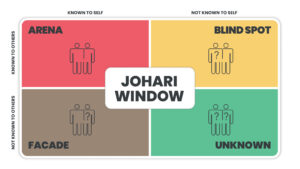
For this, check out the Johari Window, a framework that can help you identify what’s known to yourself (or not) and what’s known to others about you (or not). See below.

Source: Adobe Stock

How many people get to see your true self? Do you have blind spots—things that are known by others about you that you’re not aware of? Consider writing down ten words that describe yourself—your main characteristics. Then have people who know you well do the same for you. Compare the lists to see how much overlap there is (or isn’t).


5. Journal.

As you journal, reflect on your experiences and feelings. Seek insights and look for patterns.


6. Join or start a small group.

When run well, small groups can facilitate deep conversations about meaningful things. Make sure the conversation includes not only self-reflection but also input from the group. That way, participants will have a chance to consider new insights in a safe environment.


7. Make time for renewal and sanctuary.

Engage in daily restorative activities (e.g., meditation, yoga, or gardening). Find places or practices of peace that help you guard and recenter your heart. Without renewal and sanctuary, you’re likely to be too scattered and frazzled to maintain high self-awareness.


Developing your self-awareness will have powerful effects on your life, work, relationships, and leadership. It’s an investment that pays big dividends.

“’Know thyself’… is still the most difficult task any of us faces. But until you truly know yourself, strengths and weaknesses, know what you want to do and why you want to do it, you cannot succeed in any but the most superficial sense of the word.” -Warren Bennis, On Becoming a Leader

Warren Bennis quote


Reflection Questions

  1. How well do you know yourself?
  2. Might you be overestimating your self-awareness, like so many others?
  3. Are you asking for feedback regularly, and are you truly open and receptive to it?


Tools for You

Strengths Search

We all have core strengths–the things in which we most excel. Take this self-assessment to determine your core strengths so you can integrate them more into your life and work.


Related Articles


Related Books and Videos

  • Parker Palmer, Let Your Life Speak: Listening for the Voice of Vocation
  • Tasha Eurich, Insight: The Surprising Truth about How Others See Us, How We See Ourselves, and Why the Answers Matter More than We Think
  • William L. Sparks, “The Power of Self-Awareness,” TEDx Asheville
  • Tasha Eurich, “Increase Your Self-Awareness with One Simple Fix,” TEDx Mile High


Postscript: Inspirations on Self-Awareness

  • “Knowing others is intelligence; knowing yourself is true wisdom.” -Lao Tzu, ancient Chinese philosopher
  • “Know thyself.” -inscribed on the temple wall at Delphi, 6th century BCE
  • “If a man does not know himself, how should he know his functions and his powers?” -Michel de Montaigne, 16th century French Renaissance philosopher and writer
  • “Self-knowledge is best learned, not by contemplation, but by action. Strive to do your duty and you will soon discover of what stuff you are made.” -Johann Wolfgang von Goethe, German writer, poet, and scientist
  • “Do you want to know who you are? Don’t ask. Act! Action will delineate and define you.” -Witold Gombrowicz, Polish writer
  • “When I discover who I am, I’ll be free.” -Ralph Ellison, Invisible Man
  • “The deepest vocational question is not ‘What ought I to do with my life?’ It is the more elemental and demanding ‘Who am I? What is my nature?’… Vocation does not come from willfulness. It comes from listening…. Before I can tell my life what I want to do with it, I must listen to my life telling me who I am.” -Parker Palmer, Let Your Life Speak: Listening for the Voice of Vocation
  • “To be aware of a single shortcoming within oneself is more useful than to be aware of a thousand in somebody else.” -Tenzin Gyatso, 14th Dalai Lama
“Self-awareness is the foundation of authenticity. You develop it by exploring your life story and your crucible, and by understanding how these experiences shape you as a person and leader. You enhance it as you seek honest feedback from others. You refine it by adopting practices that help you remain mindful and aware, even amidst life’s chaos.”
-Bill George and Zach Clayton, True North: Emerging Leader Edition


* There are two types of self-awareness, according to researchers. The first type, internal (or private) self-awareness, is about how clearly you see yourself and whether you notice and reflect on your own internal state. The second type, external (or public) self-awareness, is about how aware you are of how you appear to others.

Gregg Vanourek’s Newsletter

Join our rapidly growing community. Sign up now and get monthly inspirations (new articles, opportunities, and resources). Welcome!


+++++++++++++++++

Gregg Vanourek is a writer, teacher, and TEDx speaker on personal development and leadership. He is co-author of three books, including LIFE Entrepreneurs: Ordinary People Creating Extraordinary Lives (a manifesto for integrating our life and work with purpose, passion, and contribution) and Triple Crown Leadership: Building Excellent, Ethical, and Enduring Organizations (a winner of the International Book Awards). Check out his Best Articles or get his monthly newsletter. If you found value in this article, please forward it to a friend. Every little bit helps!

Why Self-Awareness Is So Important–And How to Develop It

Article Summary: 

Self-awareness is critical in our life, work, and relationships, but many of us struggle with it. How to develop self-awareness.

+++

To be self-aware is to have a good understanding of ourselves, including conscious knowledge of our feelings, motives, and desires. Self-awareness (also known as self-knowledge) involves having a clear, accurate, and deep understanding of our emotions, values, strengths, and weaknesses. It also involves having a realistic view of ourselves, including a good and true sense of how we’re coming across to others.

In her book, Insight: The Surprising Truth About How Others See Us, How We See Ourselves, and Why the Answers Matter More Than We Think, organizational psychologist Dr. Tasha Eurich defines self-awareness as “the ability to see ourselves clearly to understand who we are, how others see us, and how we fit into the world around us.” She calls it the “meta-skill of the 21st century.” It may be an important skill in this century, but we’ve known about the importance of self-awareness for millennia.

“Know thyself.”
-inscribed on the temple wall at Delphi, 6th century BCE

According to researchers, there are two types:

  1. Internal (or private) self-awareness is about how clearly we see ourselves and whether we notice and reflect on our own internal state.
  2. External (or public) self-awareness is about being aware of how we appear to others.


Self-Awareness and Emotional Intelligence

Self-awareness is closely associated with emotional intelligence (EQ). Pioneering psychologist Daniel Goleman considers self-awareness one of the four domains of emotional intelligence (along with self-management, social awareness, and relationship management)—and emphasizes that it’s the foundation for the other three.

According to Goleman, self-awareness involves certain personal competences, including:

  • Accurate self-assessment: knowing our strengths and weaknesses
  • Emotional self-awareness: reading our own emotions and recognizing their impact
  • Self-confidence: having a good sense of our capabilities and self-worth

Take the Traps Test

We all fall into traps in life. Sometimes we’re not even aware of it, and we can’t get out of traps we don’t know we’re in. Evaluate yourself with our Traps Test.


The Consequences of Lacking Self-Awareness

When we lack self-awareness, we have blind spots that get us into trouble, and we don’t know the underlying reasons for our actions. As a result, we’re likely to keep making the same mistakes, and we’ll be less likely to take responsibility for them, damaging our credibility.

Think of the compulsive talkers who don’t let others get a word in during conversations, unaware that people find it off-putting because it shows a lack of interest in others. Consider the frequent criticizers who spend so much time judging others instead of addressing their own issues.

Think of the people who keep bringing up politics out of the blue and saying things that hurt or offend the people around them without realizing it. Consider the people who speak loudly in public places, unaware that they’re disturbing everyone around them.

Think about the reserved introvert who unintentionally comes across as aloof or uninterested. Note the chronic complainer who never asks others how they’re doing. Consider the perpetual dreamers who never get around to the things they need to do to get started.

We’re all flawed—and prone to self-deception—so we should approach these cases with empathy and grace. But in many cases, a little self-awareness would go a long way toward helping people get out of their own way.

“Knowledge of the self is the mother of all knowledge. So it is incumbent on me to know my self, to know it completely, to know its minutiae, its characteristics, its subtleties, and its very atoms.”
-Khalil Gibran, Lebanese writer and poet


20 Benefits of Developing Self-Awareness

The good news is that we can develop self-awareness, even if we’re low on it (as many are). Having a high level of self-awareness can help us in many ways. For example, it can:

  1. help us see our blind spots for the first time—or see them more clearly
  2. improve our decision-making
  3. help us communicate more effectively
  4. increase our confidence
  5. help us manage stress
  6. enhance our sense of personal control
  7. help us develop our social intelligence and relational awareness, in the process improving our relationships
  8. help us avoid wearing a mask or creating a persona that lacks authenticity
  9. increase our happiness and fulfillment
  10. help us recognize the ruts we’ve fallen into
  11. help us use more of our potential
  12. enhance our influence
  13. facilitate higher job satisfaction
  14. improve our ethical behavior, making us less likely to lie, cheat, or steal
  15. help us avoid looking to others too much for what we should do
  16. help us find good work that’s a good fit for us—and know what work we should avoid
  17. help us understand what makes us come alive and what drains us
  18. help us discover our purpose and what feels meaningful
  19. help us answer the question of what we should do with our lives based on what we’re good at and how we can best add value to others
  20. help us connect with our dreams, including a vision of our ideal self, in the process invoking our energy and excitement for life

Developing our self-awareness is a necessary step in honoring our nature and becoming who we want to be instead of conforming to the desires of others. It’s also a necessary step in developing self-acceptance and self-compassion. Developing self-awareness also helps illuminate our “shadow side”—the parts of our personality that we don’t want to admit—which is a necessary part of human development.

Quality of Life Assessment

Evaluate your quality of life in ten key areas by taking our assessment. Discover your strongest areas, and the areas that need work, then act accordingly.


Why Self-Awareness Can Be So Hard

Dr. Tasha Eurich and her colleagues researched self-awareness via multiple investigations with nearly 5,000 participants. She describes their results as follows:

“…even though most people believe they are self-aware, self-awareness is a truly rare quality:
We estimate that only 10-15% of the people we studied actually fit the criteria.”

Why is this so hard? Several reasons.

We’re subject to all sorts of influences from our family and friends, and from our culture, that cause us to question who we are and pull us away from it. We’re confused by the cultural influences that don’t align with our own values. Sometimes, we end up defaulting to the values given to us by our parents, peers, or culture (e.g., values related to money or success) and rarely take the time for self-inquiry—or to consider the downsides of those values and whether there may be better alternatives.

It’s hard to admit our weaknesses and face them. Being self-aware often hurts, so we tend to avoid it. This is the work of our fragile ego in defense mode.

We’re used to hiding tender parts of ourselves when we don’t feel safe admitting or revealing who we really are. We fear harsh judgment by ourselves or others.

We’re too busy or overscheduled, so we don’t take time for reflection and introspection.

We tend to default to emotion-driven interpretations of events and encounters instead of pausing to reflect on our inner state and how we may have contributed to things.

We’re accustomed to leaping right into action instead of having the patience and humility to inquire into the deeper reasons for things and our self-sabotaging patterns.

We feel uncomfortable with the cognitive dissonance between the messiness of reality and our perfectionistic tendencies. It’s too painful to look at our shortcomings, so we remain in denial.


How to Develop Self-Awareness

Clearly, developing self-awareness is difficult, for many reasons. But given all its powerful benefits, it’s worth our focused and ongoing attention.

So, how to develop self-awareness? Before answering that, we’re wise to ask: Awareness of what, exactly? What does self-awareness include? Ideally, it includes our life story, purpose, values, vision, strengths, passions, emotions, motivations, needs, desires, successes, curiosities, weaknesses, shadow sides, traps, vulnerabilities, and blind spots.

Given that, here are things we can do to facilitate greater self-awareness:

Develop a propensity for frequent self-reflection (1), including taking time to reflect on meetings or other encounters and their emotional wake. Also, pay attention to what we love and long for, and what makes us come alive. This requires a commitment to self-inquiry and an intentional discovery process (what I call “discover mode”), including listening to our inner voice.

“Listen to your life. See it for the fathomless mystery that it is.”
-Frederick Buechner, Presbyterian minister, theologian, and writer

Seek input and guidance from family, friends, mentors, and coaches. Ask for honest feedback, including about our weaknesses and blind spots. At work, this should include “360-degree reviews.”

Convene a small group to facilitate deep conversations about meaningful things in members’ lives. Make sure the conversation includes self-reflection with input from the group, so participants have a chance to consider new insights in a safe environment and search for patterns.

“…inner work, though it’s a deeply personal matter, is not necessarily a private matter:
inner work can be helped along by community.”
-Parker Palmer, Let Your Life Speak

Try using the Johari Window. It’s a framework that helps us identify what’s known to ourselves (or not) and what’s known to others about us (or not). See the image below.

Source: Adobe Stock

For many of us, we don’t let many people see our true selves (limiting what shows up in the upper left “Arena” quadrant). Also, we may have several blind spots—things that are known by others about us that we’re not aware of (in the upper right quadrant). Consider writing down ten words that describe yourself (your main characteristics) and then having one or more people who know you well do the same for you. Then, compare the lists to see the extent of overlap on the different lists. One goal of this work is to get us to show more about ourselves to others, in the process shrinking how much of ourselves we hide or that remains unknown to others.

Journal intentionally, since it can help us reflect on our feelings and experiences, sometimes uncovering insights or patterns.

Take time for renewal and sanctuary, including daily restorative activities (e.g., gardening or yoga) and places or practices of peace that help us recenter our hearts. Without time for renewal and sanctuary, we’ll be too scattered and frazzled to maintain self-awareness.

Take assessments that facilitate our self-awareness and personal growth. Examples include:


Conclusion

Self-awareness is sometimes painful—like when we discover hard truths about how others see us or first learn about major blind spots. Still, it’s well worth it. Without self-awareness, we’re likely to fall into several traps—and perhaps remain in them unknowingly, blind to our unhappy predicament.

Developing self-awareness can help facilitate real growth and development—and sometimes breakthroughs. We can only grow and develop when we have the courage to admit the traps we’re in and acknowledge our shadow side.

As we commit or recommit to developing our self-awareness, we’re wise to consider where many people get it wrong and trip up. Here are three final cautions about this process of becoming more self-aware:

First, self-awareness isn’t only about introspection and talk. The real value comes when we take action in the world based on a high level of self-awareness, such as when we build our life and work around our strengths and find viable workarounds for our weaknesses and blind spots, like asking for help from people who are strong in those areas.

“Do you want to know who you are? Don’t ask. Act! Action will delineate and define you.”
-Witold Gombrowicz, Polish writer

Second, self-awareness isn’t only about the self. It’s also about the self in the larger context of our lives, including our family, friends, community, work, convictions, and commitments. As Quaker teacher Douglas Steere wisely noted, the ancient question “Who am I?” inevitably leads to the question “Whose am I?”

Third, our identities aren’t fixed. We’re multifaceted and dynamic, so our self-awareness needs to keep up with the changes in our inner and outer lives. New challenges and changes will continue—both imposed on us and chosen by us—giving us opportunities for more depth and insight in our quest to know ourselves so we can live more fully and freely.


Reflection Questions

  1. How well do you know yourself, and how can you be sure?
  2. Do you keep falling into old traps and patterns that hold you back, indicating that you may have some blind spots?
  3. Are you asking for feedback regularly and truly being open to it?


Tools for You

Personal Values Exercise

Complete this exercise to identify your personal values. It will help you develop self-awareness, including clarity about what’s most important to you in life and work, and serve as a safe harbor for you to return to when things are tough.


Related Articles

“How can man know himself? It is a dark, mysterious business…. It is also an agonizing, hazardous undertaking thus to dig into oneself, to climb down toughly and directly into the tunnels of one’s being…. Let the young soul survey its own life with a view of the following question: ‘What have you truly loved thus far? What has ever uplifted your soul, what has dominated and delighted it at the same time?’ Assemble these revered objects in a row before you and perhaps they will reveal a law by their nature and their order: the fundamental law of your very self. Compare these objects, see how they complement, enlarge, outdo, transfigure one another; how they form a ladder on whose steps you have been climbing up to yourself so far….”
-Friedrich Nietzsche, German philosopher


Related Books and Videos

  • Christopher Gergen & Gregg Vanourek, LIFE Entrepreneurs: Ordinary People Creating Extraordinary Lives (esp. Chapter 3)
  • Parker Palmer, Let Your Life Speak: Listening for the Voice of Vocation
  • Tasha Eurich, Insight: The Surprising Truth about How Others See Us, How We See Ourselves, and Why the Answers Matter More than We Think
  • William L. Sparks, “The Power of Self-Awareness,” TEDx Asheville
  • Tasha Eurich, “Increase Your Self-Awareness with One Simple Fix,” TEDx Mile High


Postscript: Inspirations on Self-Awareness

  • “Knowing others is intelligence; knowing yourself is true wisdom.” -Lao Tzu, ancient Chinese philosopher
  • “Know, first, who you are, and then adorn yourself accordingly.” -Epictetus, ancient Greek Stoic philosopher
  • “Full wise is he that can himself know.” -Chaucer, 14th century British storyteller
  • “If a man does not know himself, how should he know his functions and his powers?” -Michel de Montaigne, 16th century French Renaissance philosopher and writer
  • “Self-knowledge is best learned, not by contemplation, but by action. Strive to do your duty and you will soon discover of what stuff you are made.” -Johann Wolfgang von Goethe, German writer, poet, scientist, and statesman
  • “The purpose of life seems to be to acquaint man with himself.” -Ralph Waldo Emerson, 19th century American essayist
  • “…the world’s wisdom traditions offer a valuable secret. They teach that the unsettled mind comes about through one thing only: losing sight of who we really are…. The answer lies in finding out who you really are—a conscious agent who can choose, at any time, to live from the level of the true self.” -Deepak Chopra, spiritual teacher and author
  • “When I discover who I am, I’ll be free.” -Ralph Ellison, Invisible Man
  • “Most folks go through most days on automatic pilot and don’t reflect upon it. When you say, ‘Why did I do that? What was that in service to inside of me? What old button, or issue, or agenda did that hit in me? When have I been here before?’ these are questions that begin to open up the mechanism working within each of us. And through that, you gain some greater sense of self-awareness. And with that, the potential for a great sense of freedom in how you live your life.” -James Hollis, quoted in Oliver Burkeman, Four Thousand Weeks: Time Management for Mortals
  • “The deepest vocational question is not ‘What ought I to do with my life?’ It is the more elemental and demanding ‘Who am I? What is my nature?’” -Parker Palmer, Let Your Life Speak
  • “To be aware of a single shortcoming within oneself is more useful than to be aware of a thousand in somebody else.” -Tenzin Gyatso, 14th Dalai Lama
  • “Vocation does not come from willfulness. It comes from listening. I must listen to my life and try to understand what it is truly about—quite apart from what I would like it to be about—or my life will never represent anything real in the world, no matter how earnest my intentions…. Before I can tell my life what I want to do with it, I must listen to my life telling me who I am. I must listen for the truths and values at the heart of my own identity, not the standards by which I must live—but the standards by which I cannot help but live if I am living my own life.” -Parker Palmer, Let Your Life Speak

(1) Caution: introspection is helpful but can sometimes lead us astray, especially when we use it to ask the wrong questions. Based on data from her research on the most self-aware people, organizational psychologist Tasha Eurich recommends asking ourselves “what” instead of “why” questions to improve the value of our introspection. The “why” questions (e.g., “Why do I feel so bad?”), she notes, often concern unconscious thoughts, feelings, and motives, and our instincts about them are often wrong. What’s more, those “why” questions tend to invite negative thought patterns, including rumination. Better questions, she proposes, are “what” questions: “What are the situations that make me feel bad? What do they have in common? What are the patterns?” Those “what” questions are more likely to lead to productive insights. (Source: Tasha Eurich, “What Self-Awareness Really Is (And How to Cultivate It),” Harvard Business Review, January 4, 2018.)

Crafting Your Life and Work Course

Regain clarity, direction, and motivation for your next chapter, starting with a powerful foundation of self-awareness and commitment to your values and aspirations.


++++++++++++++++++++++++++++++
Gregg Vanourek is a writer, teacher, and TEDx speaker on personal development and leadership. He is co-author of three books, including LIFE Entrepreneurs: Ordinary People Creating Extraordinary Lives (a manifesto for living with purpose and passion) and Triple Crown Leadership: Building Excellent, Ethical, and Enduring Organizations (a winner of the International Book Awards). Check out his Crafting Your Life & Work online course or get his monthly newsletter. If you found value in this article, please forward it to a friend. Every little bit helps!